Returning to Intention
Practicing through Thresholds.
There comes a moment in every personal practice when things feel heavy. The body resists. The mind doubts. What once felt nourishing may begin to feel demanding. When this happens, it can be tempting to step away altogether, or to push harder in an effort to “get through it.”
This is often the moment when practice is asking for a different kind of attention from us.
If we understand yoga as a sadhana, then practice is not only about postures or progress in the sequence. It is about showing up with clarity of intention. Without intention, we can easily collect information, techniques, or achievements without them truly touching us. When intention is clear, practice becomes relevant and alive.
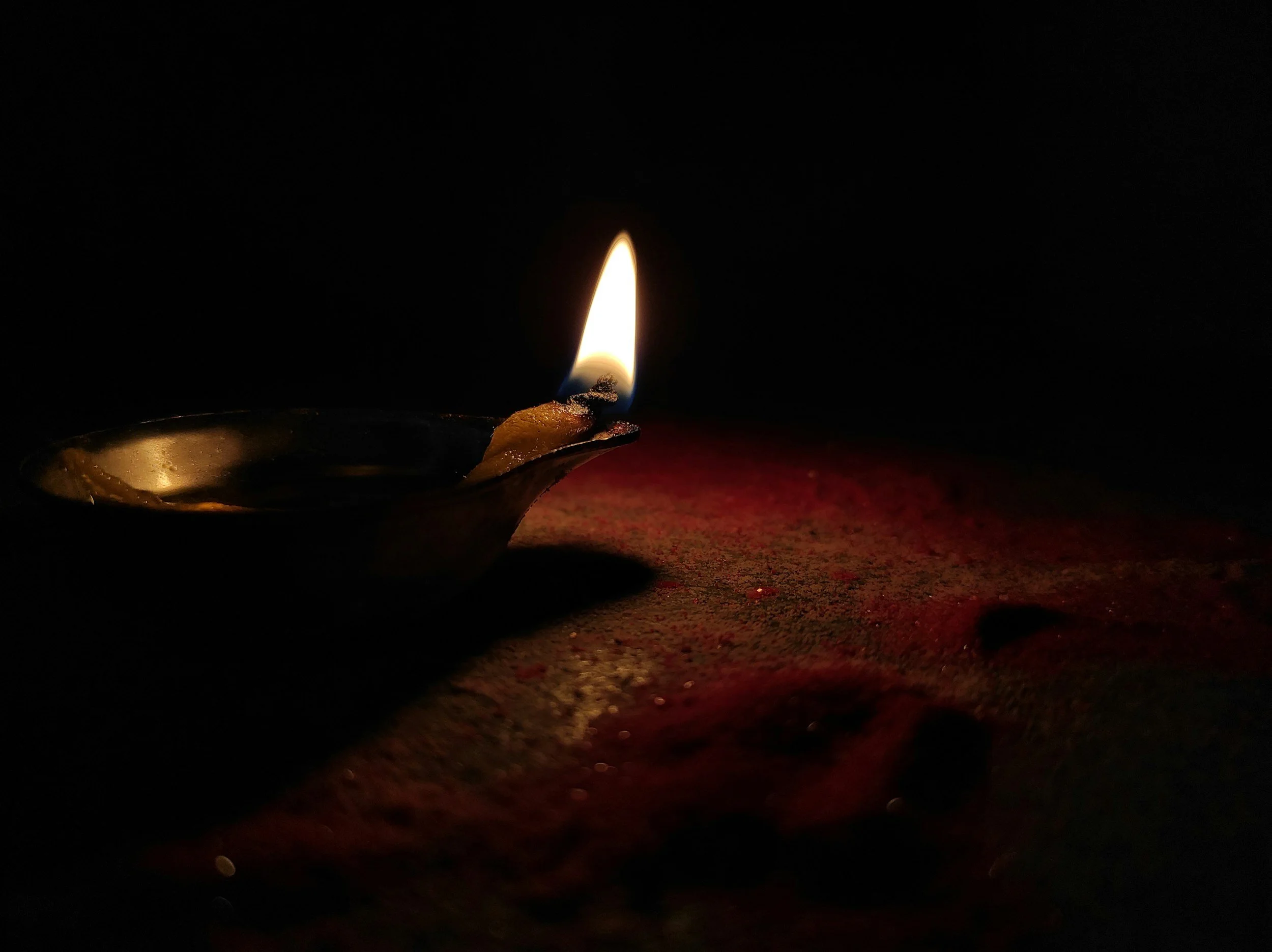
Oil lamps, lighting the sacred space and softening the path of practice.
Intention supports discipline (abhyasa)—the steady choice to return to the mat. This discipline can be fueled by commitment, or by shraddha, a sense of trust and faith in the process. When faith is present, practice no longer relies solely on personal will. Our effort becomes an offering, rather than a measure of success. This is where practice can begin to feel devotional, rather than performative.
At the same time, intention needs to be held with non-attachment (vairagya). Without it, discipline can become rigid or obsessive. With it, we are able to question, soften, and renew our intention daily. This balance keeps the practice honest and responsive, and prevents it from becoming mechanical or dogmatic.
In a world full of distraction, abhyasa and tapas work together. Abhyasa is the decision to keep showing up. Tapas is the quiet inner fire that allows us to stay with discomfort, resistance, or doubt. Together, they help us choose our practice over endless alternatives, and to return even when motivation fades.
When practice feels “too hard,” it is often reflecting something deeper. The mat becomes a mirror. It shows us our habits, our conditioning, and how we respond when things don’t go our way. Progress in the sequence is not only physical—it reflects your willingness to show up for yourself, with honesty, again and again.
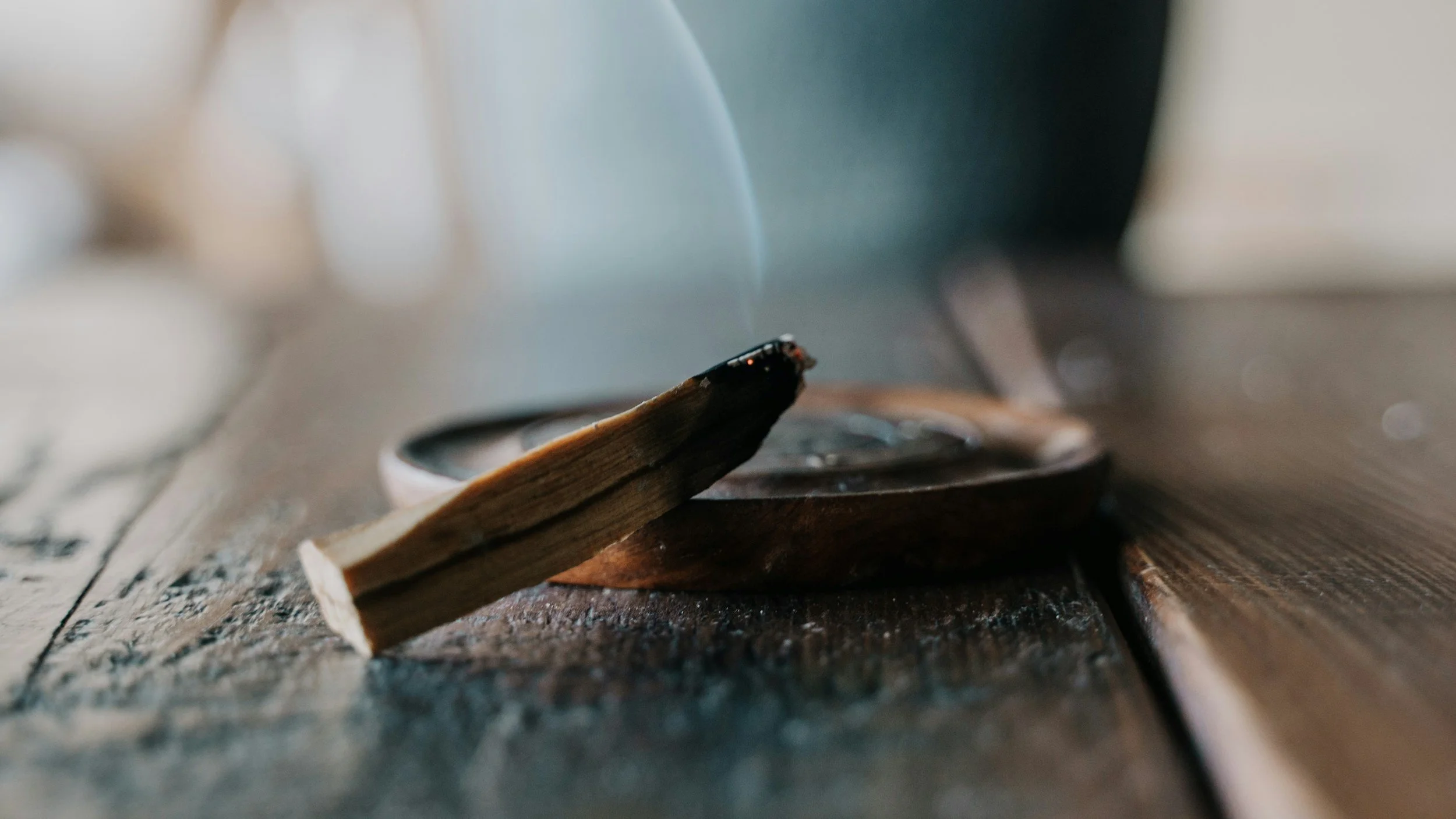
Burning palo santo, renewing intention.
In these moments, I invite you to stay a little longer, but differently. Not by pushing. Not by forcing progress. Stay by listening. Slow down. Breathe. Return to a baseline practice that feels supportive rather than demanding. Allow the practice to meet you exactly where you are.
Transformation doesn’t happen by avoiding difficulty, nor by overpowering it. It happens when we stay long enough to move through a threshold. What feels like an obstacle may be inviting a deeper kind of presence, rather than signaling an end.
And if you do choose to step away, know that nothing is lost. All the effort you’ve made will be waiting for you when you’re ready to return. Your relationship with the practice remains intact.
Every decision is respected.